


Prosecco, antico vino di un grande territorio
“Puxinum, Pucinum, Prosecho, Glera”, sono solo alcuni nomi con i quali in passato è stato conosciuto il Prosecco.
Storico vino che ha saputo esprimere la proprie caratteristiche di freschezza e giovialità sin dai tempi dei romani, infatti, era molto apprezzato da Livia, imperatrice e moglie dell’imperatore Augusto, ma molti altri hanno decantato le lodi di questo vitigno che ha saputo regalare e tutt’ora regala magnifiche emozioni a chi lo degusta. Dal poeta S. Veneziano Fortunato al famoso Aurelio Acanti con la sua opera il “Roccolo Ditirambo” al Villafranchi dove nel saggio “Enologia Toscana”descriveva le origini di questo vitigno nel golfo di Trieste, fino a nomi noti che si sono portati fino ai nostri giorni come Francesco Maria Malvolti e Antonio Carpenè che hanno contribuito all’iniziale espansione di questa varietà e al suo studio.
Il Prosecco ha saputo mantenersi nel corso dei secoli anche grazie agli sforzi compiuti dai singoli viticoltori che lavorando appassionatamente e sapientemente, hanno portato ad elevati standart di qualità questo famoso vino. Attualmente con il termine “Prosecco” viene riconosciuto il vino ottenuto dalla Glera, il nome con il quale viene identificato il vitigno atto a diventare Prosecco.
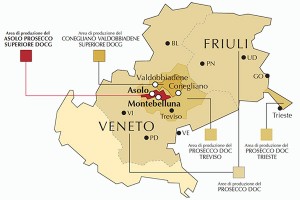
Zona di Produzione Prosecco DOC e DOCG
La coltivazione di questa varietà è consentita in due regioni (Friuli Venezia Giulia e Veneto) ma con delle limitazioni, infatti, il Prosecco DOC viene coltivato in entrambe le regioni e in 9 province autorizzate: Trieste, Gorizia, Udine Pordenone, Treviso, Belluno, Venezia, Padova, Vicenza. Quando la raccolta delle uve, la vinificazione e l’imbottigliamento avvengono completamente nelle province di Treviso e Trieste, si possono usare le menzioni speciali Treviso o Trieste a sottolineare il valore particolare che queste due province hanno ricoperto all’interno della storia del Prosecco.
Di Prosecco DOC esistono tre tipologie: “Spumante”, “Frizzante” e quella meno nota “Fermo”, a sua volta, la tipologia “Spumante” può essere vinificata con le diciture Extradry, Dry e Brut a seconda del contenuto zuccherino residuo
Spostandosi esclusivamente in terra Veneta, il Prosecco assume connotazioni territoriali diverse e più ristrette, infatti il Conegliano Valdobbiadene Prosecco Superiore DOCG viene prodotto esclusivamente nelle colline di Conegliano e Valdobbiadene in un territorio costituito da 15 comuni e comprendendo le due capitali del Prosecco, Conegliano come centro di ricerca e sviluppo e Valdobbiadene come cuore produttivo e storico della varietà
I vitigni utilizzati per la produzione del Prosecco DOCG, tranne che per la sottozona Cartizze, sono essenzialmente la Glera più altri vitigni minori e storici della zona come Verdiso, Glera Lunga, Bianchetta Trevigiana, Perera, ma anche varietà come Pinot Grigio, Pinot Bianco, Chardonnay e Pinot nero vinificato in bianco. In questo caso abbiamo delle sottozone con le quali il nome Prosecco può essere accompagnato e sono: “Rive” da una dicitura dialettale che significa pendio, identifica la produzione ottenuta dai vigneti più ripidi e vocati con uve provenienti da un unico Comune o frazione di esso, per esaltare le caratteristiche che il territorio conferisce al vino. Nella denominazione sono presenti 43 rive, ed ognuna di esse esprime una diversa peculiarità di suolo, esposizione e microclima. Nel Rive la produzione è ridotta a 13 t per ettaro, le uve vengono raccolte esclusivamente a mano e viene indicato in etichetta il millesimo.
Vertice qualitativo e sintesi aurea della denominazione, il Cartizze proviene da una sottozona disciplinata fin dal 1969 di soli 107 ettari di vigneto, a forma di pentagono, compresa tra le colline più scoscese di San Pietro di Barbozza, Santo Stefano e Saccol, nel comune di Valdobbiadene. Da una perfetta combinazione tra microclima dolce e terreni molto antichi ne deriva un vino unico nel suo genere sia come sapori ed emozioni che riesce a dare, sia come vitigno, infatti, l’unico vitigno con il quale è concessa la produzione di Prosecco Superiore del Cartizze è la Glera.
Per non salutarvi con l’amaro in bocca, sarete accompagnati in una breve descrizione degli abbinamenti possibili con il Prosecco distinguendolo per concentrazione zuccherina:
Tipologia Brut: Si apprezza con antipasti di pesce e di verdure, a primi classici della tavola italiana come una semplice pasta al pomodoro, e se volete un sapore più esotico provate invece con il sushi o il sashimi
Tipologia Extra Dry: Dal freddo dell’inverno all’estate più solare l’extra dry si sposa bene con minestre di legumi, frutti di mare, paste con delicati sughi di carne, formaggi freschi e carni bianche in particolare con il pollame.
Tipologia Dry: Con una elegante nota abboccata, è apprezzata con dolci a pasta secca o con i cibi piccanti della cucina fusion.
[:en]
Prosecco, an ancient wine of a great territory
“Puxinum, Pucinum, Prosecho, Glera”, are just a few of names by which Prosecco wine has been known in the past.
Prosecco is an ancient wine that has been able to express its characteristics of freshness and joviality since Roman times: indeed, it was much appreciated by Livia, Empress and wife of Augusto Emperor , but many others have sung the praises of this vine variety that has been able to give and still give magnificent emotions to anyone who drinks it. The prestigious list begins with the Poet S. Veneziano Fortunato, moving to the famous Aurelio Acanti with his work the “Roccolo Ditirambo” and continuing with Villafranchi who, in the essay “Enologia Toscana”, described the origins of this vine in the Gulf of Trieste. Also in our days famous people like Francesco Maria Malvolti and Antonio Carpenè has contributed to the initial expansion of this wine variety and to its study.
Prosecco has been able to maintain its qualities during the centuries ,thanks to the efforts made by individual growers who, by working passionately and expertly, have taken this famous wine to high standards of quality. Currently the term “Prosecco” indicates the wine obtained from Glera, the name of the vine variety that is used to obtain Prosecco wine
Production Area of Prosecco DOC and DOCG
The cultivation of this variety is allowed in two regions ( Friulia Venezia Giulia and Veneto) but with some limitations: indeed, the Prosecco DOC in grown in both Regions and in 9 authorized provinces: Trieste, Gorizia, Udine Pordenone, Treviso, Belluno, Venezia, Padova, Vicenza. When the grape harvest, the winemaking process and the bottling phase take place entirely in the provinces of Treviso and Trieste, we can use the special mention of Trieste or Treviso to emphasize the specific value that these two provinces have held within the Prosecco wine history.
There are 3 types of Prosecco DOC: “Champagne” “ Sparkling” and the less one known as “Fermo”; in turn, the “Champagne type” can be vinified with Extradry, Dry and Brut endorsement according to the residual sugar content.
Talking exclusively about Veneto region, the Prosecco takes on different and more restricted territorial connotations. Indeed, the Conegliano Valdobbiadene Prosecco Superiore DOCG (i.e Controlled and Guaranteed Designation of Origin) is produced exclusively in the Conegliano and Valdobbiadene hills, in a territory of 15 municipalities comprising the two capitals of Prosecco: Conegliano, the research and development centre, and Valdobbiadene, the productive and historical hearth of this variety.
The Vines used for the production of the Prosecco DOCG, except for the subarea of Cartizze, are essentially the Glera and other minor and historical vines of the area like Verdiso, Glera Lunga, Bianchetta Trevigiana, Perera, but also other varieties like Pinot Grigio, Pinot Bianco, Chardonnay and Pinot Nero when vinified in white. In this case we have some subareas which can accompany Prosecco name: “Rive”, a dialect word meaning slope, identifies the production obtained from the steeper vineyards with grapes of a single municipality or a fraction of it, to enhance the characteristics that the territory gives to the wine. There are 43 Rive (slopes), and each one expresses a different peculiarity of the soil, exposure and microclimate. In the Rive the production is reduced to 13 t per hectare, the grapes are exclusively hand-harvested and the year of production is indicated in the label.
The Cartizze variety represents the top quality of the designation; it comes from a sub-area of only 107 hectares of vineyard, regulated since 1969: the area has a pentagon shape and it is included between the steep hills of San Pietro di Barbozza, Santo Stefano e Saccol, in the municipality of Valdobbiadene. Mixing a perfect combination of a gentle microclimate and a very ancient land, the result is a unique wine in its kind, both as a vine and for the flavors and emotions that it can provide: actually, the only vine with which the production of the Cartizze Prosecco Superiore is allowed is the Glera.
Not to greet you with a bad taste in your mouth, you will be guided in a brief description of the possible combinations with Prosecco wine, distinguishing each of them according to its sugar concentration
Brut type: It is appreciated with fish and vegetables appetizers and with classic first dishes of Italian cuisine as a simple pasta with tomato sauce. If you want a more exotic flavor try it instead with sushi or sashimi.
Extra-dry type: from the coldest Winter to the sunniest Summer, the extra dry Prosecco goes well with vegetable soups, seafood, pasta with delicate meat sauces, fresh cheeses and white meat, especially poultry.
Dry type: With an elegant bite note, it is appreciated with sweets or dried pasta or with spicy foods of the fusion cuisine.